
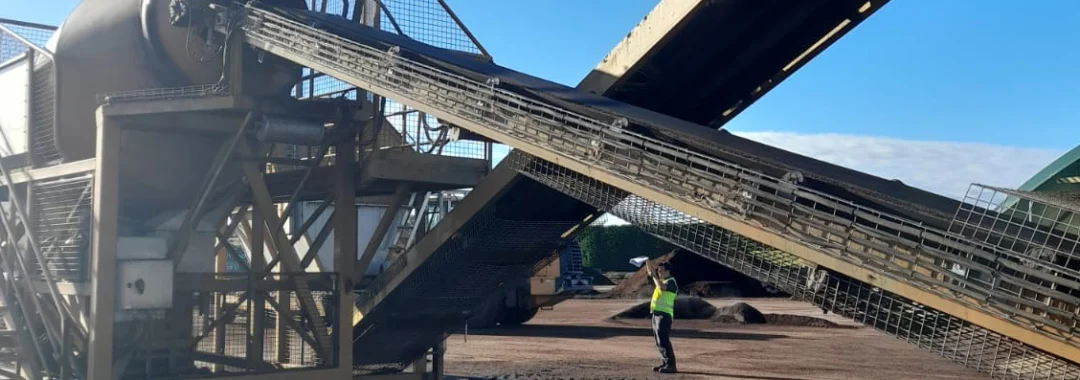
New Zealand’s quarry sector has shifted rapidly toward mobile crushing and screening, with tighter margins and higher expectations on uptime. At QuarryNZ in July, Motion will be talking with quarry operators about practical site support – fast response, fit-for-purpose conveyor products, and service routines that reduce breakdown risk.
Quarrying has always been a local game: the closer the rock is to the job, the lower the transport cost. But as diesel costs and project dynamics have changed, so has the shape of the industry. Alan Harris, Motion Conveyance Solutions – NZ Manager, says many operators have moved away from relying on one large, fixed plant quarry servicing a wide radius.
“Instead of having fixed plants at one quarry, we’re seeing more mobile plant,” Harris says. “They take the equipment to the rock face, then move on to the next job.”
That trend matters, because mobile plant brings its own reliability challenges. Compact layouts leave less room for error, and small issues can escalate quickly. “Mobile plants tend to destroy belts quite often,” Harris notes. “When you’ve got compact equipment, you don’t get many places to watch what’s going on – one errant stone can carve up a belt.”
For quarry operators, that can mean lost production, rushed maintenance, and higher safety exposure during change-outs. It is also why Motion is using QuarryNZ as a platform to focus on site servicing – helping customers keep plant moving, wherever the job is.
What Motion will be focusing on at QuarryNZ
Motion’s team will be on the ground at QuarryNZ in July with a practical message: reduce downtime by matching products and service support to how quarries actually run today.
For mobile operations, that includes conveyor belt and roller support suited to compact, high-cycle equipment. Harris says Motion carries multiple belt options specifically intended for mobile plant applications, backed by technical support to help choose the right belt for duty and layout.
For larger, more traditional static sites, the conversation shifts to whole-of-system reliability – belt selection, belt tracking support, roller condition, transfer-point wear, and planned maintenance routines that reduce the frequency of unplanned stoppages.
Site servicing that fits the job schedule
The common thread is service responsiveness. Many quarry operators do not have the time – or the internal resources – to troubleshoot recurrent conveyor issues while also meeting production targets. Motion’s approach is to support quarry sites with practical servicing aligned to real operating conditions, including:
- On-site assessment and product selection support, based on where impact and abrasion are happening in the circuit.
- Breakdown and planned servicing assistance, to reduce the number of reactive belt and roller events.
- Support for installation and change-outs, helping teams complete work safely and efficiently.
- Access to a wider product range and technical backing, so the solution fits the duty rather than forcing a one-size-fits-all approach.
Harris also points to a broader product quality and traceability advantage. Motion’s conveyor belts are made to Motion specifications, built and tested to ISO standards, and identifiable back to their supporting documentation. “We stamp every belt with a special identification that relates back to the spec sheet and test sheets,” he says.
At QuarryNZ, the goal is straightforward: connect with quarry operators, understand where reliability pain points are showing up, and demonstrate how Motion can support sites with the products, service capability and technical know-how to keep conveyors running.