
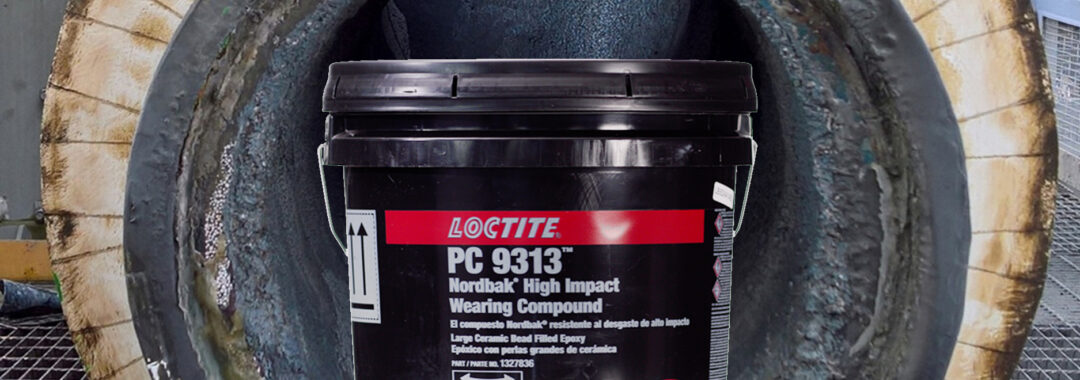
In mining plants, abrasion at transfer points and/or changes in the direction of flow can turn into a constant cycle of patching, downtime, and cost. A LOCTITE® wearing compound, supplied through Motion, helped one gold mining operation dramatically extend wear life on a critical ball mill feed pipe – without welding, tiling, or specialist contractors.
Wear is a fact of life in mining. Any time rock and slurry change direction – through chutes, bins, elbows, and transfer points – surfaces are effectively ‘sandblasted’ by abrasive particles. Traditionally, sites have relied on hardened wear plates, ceramic tiles, or frequent patch repairs to protect vulnerable areas. The problem is that many of these fixes are labour-intensive, disruptive, or difficult to repeat consistently.
That was the situation for one Queensland gold processing operation, where an engineered elbow section on a ball mill feed pipe was wearing rapidly. “The ball mill feed pipe was copping a flogging from particle abrasion,” says Adam Schlatter, Product Manager – Adhesives, Sealants & Chemicals at Motion. “Previous coatings were only lasting four to six weeks, which meant constant recoating, heaps of downtime, and blowing the maintenance budget.”
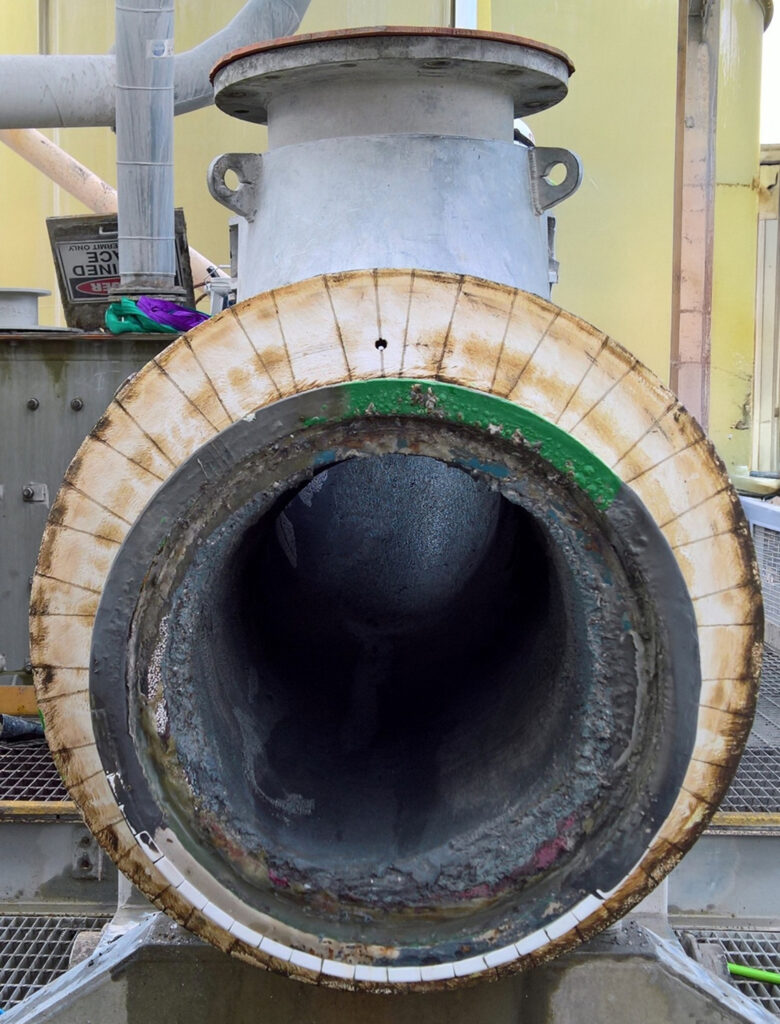
The challenge: frequent recoating and an expensive alternative
The elbow feeding into the ball mill was not a standard off-the-shelf item. The mines Maintenance Manager says replacement would require fabrication and would cost “tens of thousands” to manufacture and install – before factoring in downtime.
The site had trialled other wearing compounds without success and eventually brought in a contractor-applied silicon carbide based epoxy system that required specialist application. It lasted longer, but it was very costly and logistically difficult to repeat. “They were looking for a cheaper way to achieve the same result,” Hoelzl says.
The solution: LOCTITE PC 9313 supplied through Motion
The alternative trial was LOCTITE® PC 9313, a high-impact sacrificial wearing compound designed for abrasive service. “The customer needed something tough that would handle the impact and provide extended wear protection,” Schlatter says. “LOCTITE PC 9313 offered serious abrasion resistance without the hefty price tag or extended shutdowns of other options.”
Application was straightforward, and critically, avoided hot work. “The old coating was abraded, washed down with clean water, and left to dry,” Schlatter says. “Then some PC 9313 was manually applied as a primer coating first, followed by the thicker sacrificial topcoat.”
Hoelzl describes the process as simple and accessible. “It’s like applying bog,” he says. “You don’t need hot work permits for welders and oxy torches. You don’t need a tiler to come out and replace ceramic tiles. One person can mix it and apply it.”
Results: longer wear life, less downtime, lower labour cost
The trial delivered immediate value. “The customer was blown away with how long it lasted,” Hoelzl says. Where previous products had only lasted a few weeks, “this lasted many, many months,” and became a go-to solution for other wear points in the plant.
Schlatter quantifies the improvement: “It provided a massive difference – the customer went from recoating every four to six weeks, out to 38 weeks of solid protection, which saved the customer thousands annually in labour costs alone, plus way less downtime.”
BOX OUT: What is a LOCTITE MRO wearing compound?
Trevor Hoelzl, Loctite Application Engineer at Henkel, explains that LOCTITE’s wear protection range includes epoxy-based composites designed to act as sacrificial wear layers. “They’re epoxy-based wearing compounds filled with ceramic beads and other wear prevention additives,” he says. “You mix Part A and Part B into a thick paste, then apply it as a protective layer over the problem area.”
Unlike weld-on plate or tile systems, the key benefit is repeatability. “Because it’s sacrificial, it slowly wears down,” Trevor says. “When it gets to a certain point, you just put another coat on. It’s infinitely re-coatable.”