SKF Lubricators – Hands-off reliability

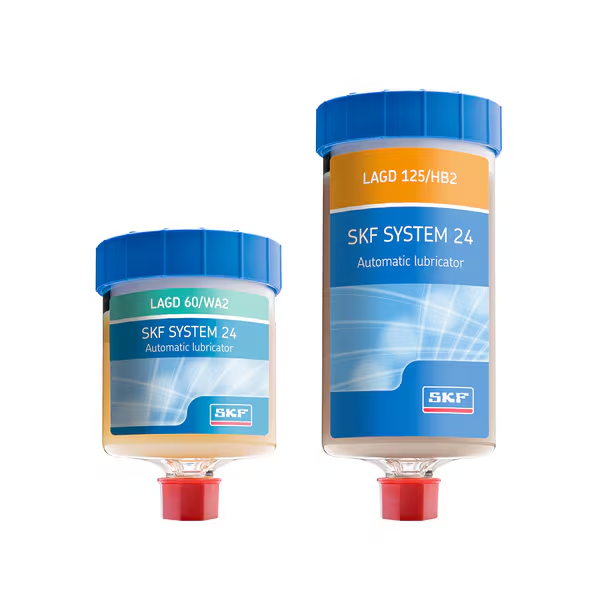
Manual greasing is inconsistent, labour-intensive, and risky in hard-to-reach spots. SKF’s automatic single-point lubricators – supplied by Motion – deliver precise, continuous lubrication to extend equipment life and cut maintenance time.

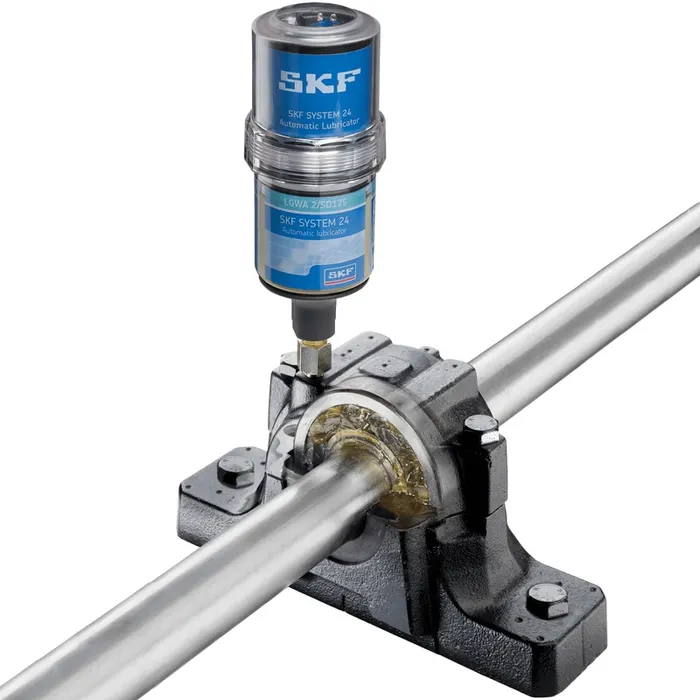
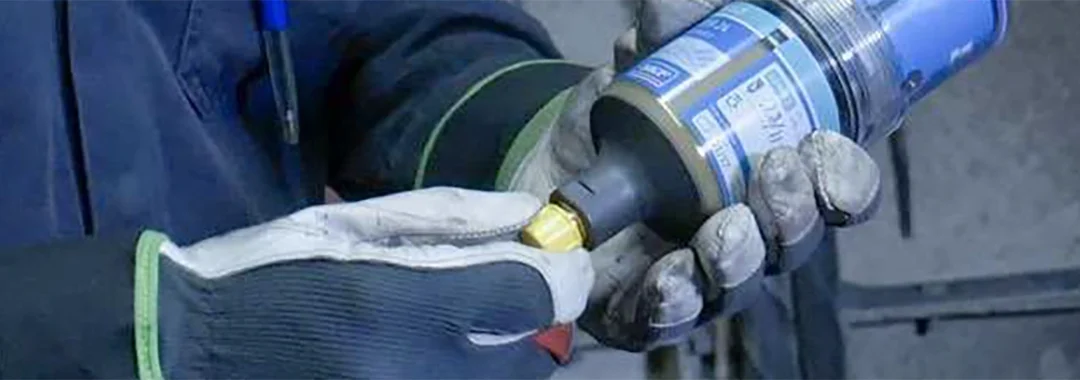
Unexpected plant stoppages can be caused by inconsistent lubrication. Manual greasing can be irregular, difficult to schedule, and a hazardous operation for staff at elevated heights, confined spaces or close to rotating assemblies. SKF’s single-point automatic lubricators take the guesswork – and the ladder climbs – out of the job, by dispensing the right amount of grease at set intervals, directly to the lubrication point. 

Compact and easy to fit, units can be configured to deliver consistently from 1 to 12 months, matching rate to operating conditions. That precision prevents under-greasing (heat and wear) and over-greasing (waste, mess, and elevated temperatures), while reducing hands-on labour during production. 

For food and beverage facilities, food-grade lubricant options support hygiene and audit compliance. Typical applications span bearing housings on motors and pumps, fans, conveyors, cranes, and chains – anywhere regular greasing is essential but access is difficult or safety exposure is high. 
The benefits go beyond reliability. Automation frees maintenance teams from repetitive routes, cuts the risk profile around live equipment, and helps standardise best practice across shifts and sites. With flexible settings and a small footprint, SKF single-point lubricators also suit retrofit programs where space and access are tight. 

SKF TLDD – Connected single-point lubricators 

A solution for wireless monitoring of automatic single-point lubricators. 

The connected single-point lubricator utilises a web dashboard and interface to monitor the status of each lubricator and provides the ability to remotely change its settings. 

Motion’s lubrication specialists can help you select the correct unit, lubricant type, and settings for each asset, then support rollout to harmonise maintenance plans across your plant. The payoff is fewer breakdowns, longer component life, and time back for higher-value tasks – all from a quick, low-effort upgrade. 

Cutting faster, lasting longer

Slow, short-lived abrasives drag down productivity and drive up costs. 3M’s latest Cubitron™ 3 range – available through Motion – delivers higher cutting speed, longer life, and improved operator comfort for maintenance and manufacturing teams.

When every minute on the tools counts, abrasive performance matters. 3M™ Cubitron™ 3 builds on the brand’s shaped abrasive grain breakthrough, refining grain geometry and bonding so each particle cuts with a sharp point, rather than ploughing the surface. The result is a cooler, cleaner cut that removes more material per pass and stays sharp for longer. 

Compared to 3M’s previous generation, Cubitron™ II, the new Cubitron™ 3 fibre discs deliver up to a 60% faster sustained cut rate and greater total stock removal. That uplift translates to fewer wheel changes, less time at the bench, and lower cost per part. 

A cooler, sharper cut also pays safety dividends. Reduced heat means less chance of discolouration or distortion on sensitive workpieces, and the smoother action helps lower hand-arm vibration and noise – supporting operator comfort over long shifts. 

Designed with automation in mind, Cubitron™ 3 abrasives help robotic and automated cells maintain throughput between maintenance intervals, making them a smart choice for plants scaling up production. 

Sustainability benefits are built in: longer-lasting consumables mean fewer discs to landfill and fewer deliveries over time, and 3M’s packaging supports waste reduction goals. 

As a trusted 3M distributor, Motion can recommend the right Cubitron™ 3 solution – discs, belts, and wheels – to match your materials, tools, and production targets. Talk to the Motion team to streamline changeovers, cut cycle times, and sharpen your competitive edge. 

MOTION AT QUARRY NZ 2026

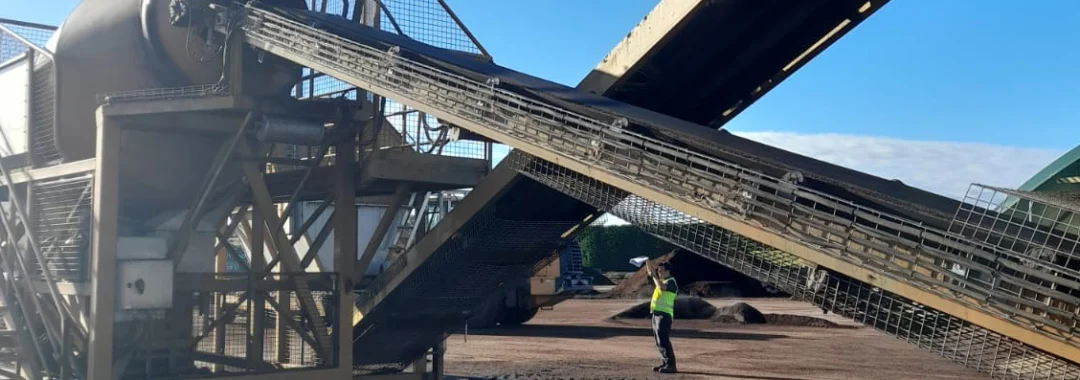
New Zealand’s quarry sector has shifted rapidly toward mobile crushing and screening, with tighter margins and higher expectations on uptime. At QuarryNZ in July, Motion will be talking with quarry operators about practical site support – fast response, fit-for-purpose conveyor products, and service routines that reduce breakdown risk. 

Quarrying has always been a local game: the closer the rock is to the job, the lower the transport cost. But as diesel costs and project dynamics have changed, so has the shape of the industry. Alan Harris, Motion Conveyance Solutions – NZ Manager, says many operators have moved away from relying on one large, fixed plant quarry servicing a wide radius. 

“Instead of having fixed plants at one quarry, we’re seeing more mobile plant,” Harris says. “They take the equipment to the rock face, then move on to the next job.” 

That trend matters, because mobile plant brings its own reliability challenges. Compact layouts leave less room for error, and small issues can escalate quickly. “Mobile plants tend to destroy belts quite often,” Harris notes. “When you’ve got compact equipment, you don’t get many places to watch what’s going on – one errant stone can carve up a belt.” 

For quarry operators, that can mean lost production, rushed maintenance, and higher safety exposure during change-outs. It is also why Motion is using QuarryNZ as a platform to focus on site servicing – helping customers keep plant moving, wherever the job is. 

What Motion will be focusing on at QuarryNZ 

Motion’s team will be on the ground at QuarryNZ in July with a practical message: reduce downtime by matching products and service support to how quarries actually run today. 

For mobile operations, that includes conveyor belt and roller support suited to compact, high-cycle equipment. Harris says Motion carries multiple belt options specifically intended for mobile plant applications, backed by technical support to help choose the right belt for duty and layout. 

For larger, more traditional static sites, the conversation shifts to whole-of-system reliability – belt selection, belt tracking support, roller condition, transfer-point wear, and planned maintenance routines that reduce the frequency of unplanned stoppages. 

Site servicing that fits the job schedule 

The common thread is service responsiveness. Many quarry operators do not have the time – or the internal resources – to troubleshoot recurrent conveyor issues while also meeting production targets. Motion’s approach is to support quarry sites with practical servicing aligned to real operating conditions, including: 

  • On-site assessment and product selection support, based on where impact and abrasion are happening in the circuit. 
  • Breakdown and planned servicing assistance, to reduce the number of reactive belt and roller events. 
  • Support for installation and change-outs, helping teams complete work safely and efficiently. 
  • Access to a wider product range and technical backing, so the solution fits the duty rather than forcing a one-size-fits-all approach. 

Harris also points to a broader product quality and traceability advantage. Motion’s conveyor belts are made to Motion specifications, built and tested to ISO standards, and identifiable back to their supporting documentation. “We stamp every belt with a special identification that relates back to the spec sheet and test sheets,” he says. 

At QuarryNZ, the goal is straightforward: connect with quarry operators, understand where reliability pain points are showing up, and demonstrate how Motion can support sites with the products, service capability and technical know-how to keep conveyors running. 

FOOD-GRADE LUBRICATION FOR DAIRY RELIABILITY

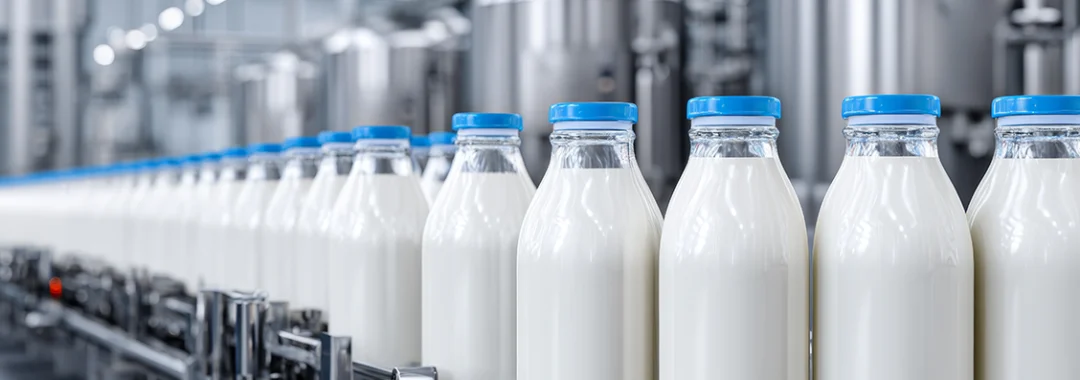
In dairy processing, lubrication must do more than reduce friction. It must protect product integrity, withstand aggressive washdowns, and support reliable operation in high-hygiene environments. 

Dairy plants operate under constant exposure to moisture, cleaning chemicals, and strict hygiene controls. In these conditions, lubrication becomes a critical risk point. Conventional lubricants can compromise food safety if leaks or overspray occur, leading to audit failures, regulatory non-compliance, and product loss. 

Frequent washdowns also strip lubrication from chains, bearings, and gearboxes, forcing maintenance teams into repeated relubrication. This increases labour costs, disrupts production, and accelerates wear. Moisture and chemical exposure further contribute to corrosion and rust, shortening equipment life and increasing the risk of unplanned downtime. Finding lubricants that meet food safety standards while still delivering long-term mechanical protection remains a challenge for many dairy operators. 

Designed for food safety and compliance 

Purpose-built food-grade lubricants help address these risks. Certified formulations suitable for incidental food contact support audit readiness and regulatory compliance, giving operators confidence that lubrication will not jeopardise product safety. 

Clear documentation and recognised certifications also simplify audits, helping ensure only approved products are used across the site. 

Performance in washdown environments 

Food-grade lubricants must also perform mechanically. High-quality formulations are engineered to resist washout, maintain film strength in wet conditions, and protect against corrosion and wear. 

This durability enables extended lubrication intervals, reducing maintenance frequency while improving asset reliability. Consistent lubrication performance helps equipment run efficiently and extends component life in high-hygiene environments. 

A consistent approach to dairy maintenance 

Effective lubrication is not only about the product itself, but also correct selection, application, and standardisation. A consistent approach helps dairy processors reduce risk, control maintenance costs, and protect critical equipment. 

In a broader sense, Motion supports dairy operations by combining certified food-grade products with practical application knowledge, technical support, and reliable supply.  

Why lubrication matters in dairy 

  • Extends equipment life.
  • Reduces unplanned downtime.
  • Improves maintenance efficiency.
  • Supports reliable plant performance.
  • Protects product safety and audit compliance.