Supporting safe, steady food production

In food and beverage manufacturing, maintenance products have to do more than work well. They have to support hygiene, simplify compliance, and help keep production moving. CRC’s food-grade range gives Motion customers in New Zealand a practical way to do all three. 

In food processing, contamination risk is not limited to ingredients. It can come from lubricants on chains, grease on bearings, cleaners on machinery, or maintenance products used too close to production without the right approvals or documentation. To address all these needs, CRC has developed a wide-ranging offering.  

At the centre of it is the CRC GREENLIGHT™ Food Safety Program, which is designed to make audit and compliance processes easier. Alongside MPI-approved maintenance products, it supports customers with centralised documentation, visual identification tools, site assessment, and ongoing compliance updates. For QA and maintenance teams, that means less time chasing paperwork and more confidence that the right product is being used in the right place.  

Food-grade products for everyday maintenance 

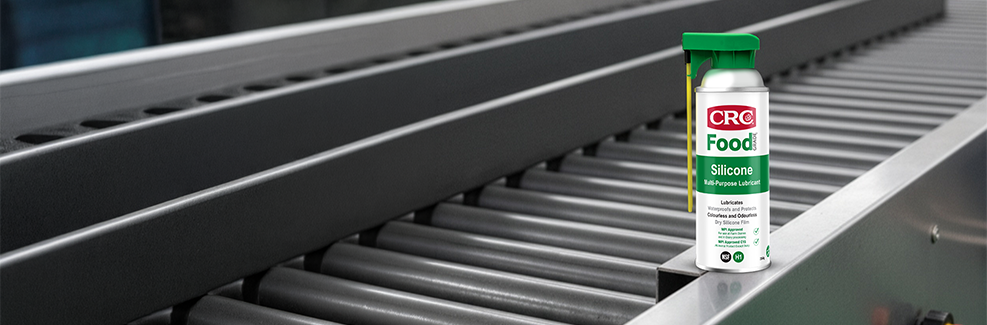
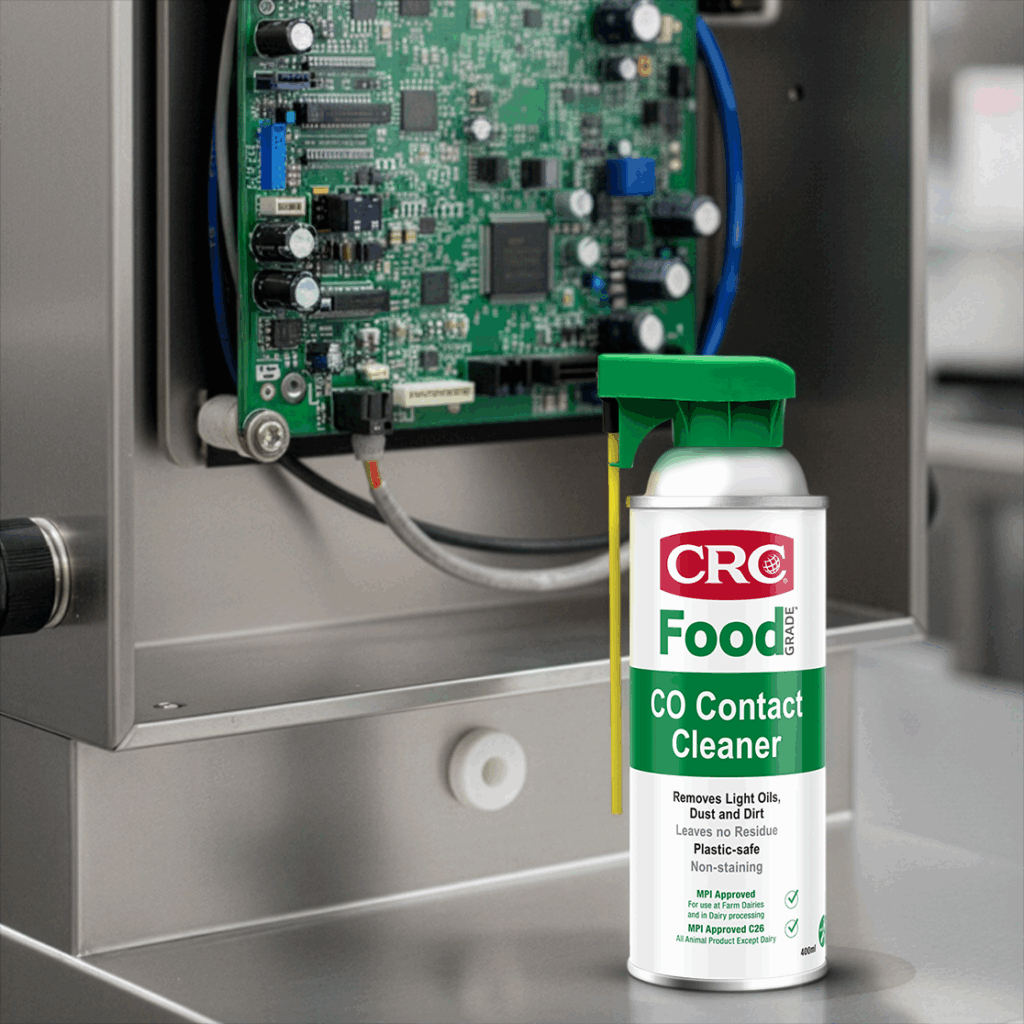
CRC’s food-grade range covers the practical jobs that keep plants running: lubricating, cleaning, protecting, and preventing wear. Standout products include Food Grade Silicone (3043) for dry-film lubrication, Food Grade CO Contact Cleaner (3102) for electrical and electronic equipment, and Food Grade Chain Lube (3091) for conveyor and drive chains. These are the kinds of products that matter in real production environments, where washdowns are frequent, hygiene is strict, and downtime is expensive.  

Problems this range is built to solve 

  • Audit and compliance pressure  
  • Contamination risk near food production  
  • Wear on chains, bearings, and moving parts  
  • Electrical cleaning in high-hygiene environments  

 A safer parts-washing option 

The new SW-33 Mobile Parts Washer gives customers a lighter, more mobile bioremediating parts-washing system, designed to clean effectively without the hazards associated with traditional solvent washers. It uses OzzyJuice degreaser and is a safer choice for both operators and the environment.  

Why buy through Motion? 

For Motion customers, the benefit is access to one of the largest CRC ranges in New Zealand, backed by nationwide supply, trusted service and technical advice. That makes it easier to source approved food-grade products and smarter cleaning systems through one reliable channel. 
MOTION AT QUARRY NZ 2026

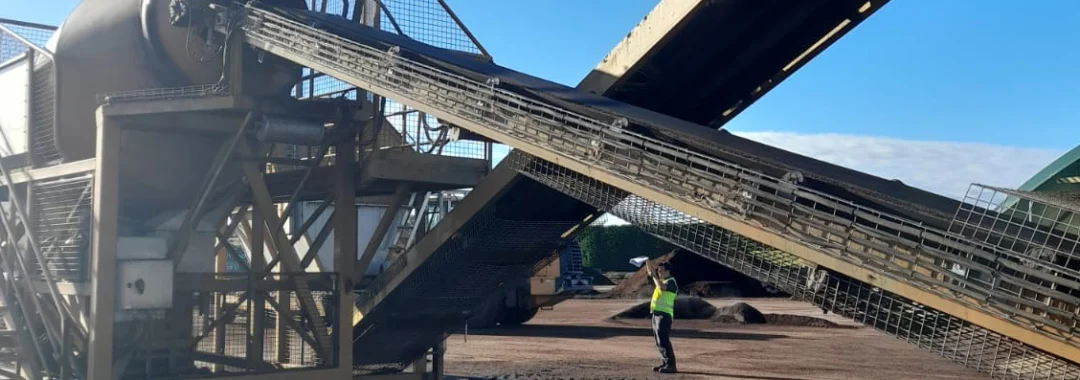
New Zealand’s quarry sector has shifted rapidly toward mobile crushing and screening, with tighter margins and higher expectations on uptime. At QuarryNZ in July, Motion will be talking with quarry operators about practical site support – fast response, fit-for-purpose conveyor products, and service routines that reduce breakdown risk. 

Quarrying has always been a local game: the closer the rock is to the job, the lower the transport cost. But as diesel costs and project dynamics have changed, so has the shape of the industry. Alan Harris, Motion Conveyance Solutions – NZ Manager, says many operators have moved away from relying on one large, fixed plant quarry servicing a wide radius. 

“Instead of having fixed plants at one quarry, we’re seeing more mobile plant,” Harris says. “They take the equipment to the rock face, then move on to the next job.” 

That trend matters, because mobile plant brings its own reliability challenges. Compact layouts leave less room for error, and small issues can escalate quickly. “Mobile plants tend to destroy belts quite often,” Harris notes. “When you’ve got compact equipment, you don’t get many places to watch what’s going on – one errant stone can carve up a belt.” 

For quarry operators, that can mean lost production, rushed maintenance, and higher safety exposure during change-outs. It is also why Motion is using QuarryNZ as a platform to focus on site servicing – helping customers keep plant moving, wherever the job is. 

What Motion will be focusing on at QuarryNZ 

Motion’s team will be on the ground at QuarryNZ in July with a practical message: reduce downtime by matching products and service support to how quarries actually run today. 

For mobile operations, that includes conveyor belt and roller support suited to compact, high-cycle equipment. Harris says Motion carries multiple belt options specifically intended for mobile plant applications, backed by technical support to help choose the right belt for duty and layout. 

For larger, more traditional static sites, the conversation shifts to whole-of-system reliability – belt selection, belt tracking support, roller condition, transfer-point wear, and planned maintenance routines that reduce the frequency of unplanned stoppages. 

Site servicing that fits the job schedule 

The common thread is service responsiveness. Many quarry operators do not have the time – or the internal resources – to troubleshoot recurrent conveyor issues while also meeting production targets. Motion’s approach is to support quarry sites with practical servicing aligned to real operating conditions, including: 

  • On-site assessment and product selection support, based on where impact and abrasion are happening in the circuit. 
  • Breakdown and planned servicing assistance, to reduce the number of reactive belt and roller events. 
  • Support for installation and change-outs, helping teams complete work safely and efficiently. 
  • Access to a wider product range and technical backing, so the solution fits the duty rather than forcing a one-size-fits-all approach. 

Harris also points to a broader product quality and traceability advantage. Motion’s conveyor belts are made to Motion specifications, built and tested to ISO standards, and identifiable back to their supporting documentation. “We stamp every belt with a special identification that relates back to the spec sheet and test sheets,” he says. 

At QuarryNZ, the goal is straightforward: connect with quarry operators, understand where reliability pain points are showing up, and demonstrate how Motion can support sites with the products, service capability and technical know-how to keep conveyors running. 

FOOD-GRADE LUBRICATION FOR DAIRY RELIABILITY

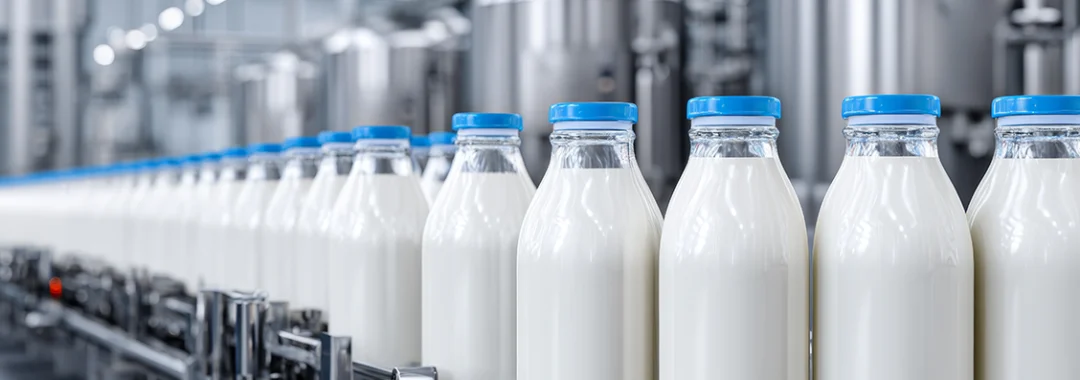
In dairy processing, lubrication must do more than reduce friction. It must protect product integrity, withstand aggressive washdowns, and support reliable operation in high-hygiene environments. 

Dairy plants operate under constant exposure to moisture, cleaning chemicals, and strict hygiene controls. In these conditions, lubrication becomes a critical risk point. Conventional lubricants can compromise food safety if leaks or overspray occur, leading to audit failures, regulatory non-compliance, and product loss. 

Frequent washdowns also strip lubrication from chains, bearings, and gearboxes, forcing maintenance teams into repeated relubrication. This increases labour costs, disrupts production, and accelerates wear. Moisture and chemical exposure further contribute to corrosion and rust, shortening equipment life and increasing the risk of unplanned downtime. Finding lubricants that meet food safety standards while still delivering long-term mechanical protection remains a challenge for many dairy operators. 

Designed for food safety and compliance 

Purpose-built food-grade lubricants help address these risks. Certified formulations suitable for incidental food contact support audit readiness and regulatory compliance, giving operators confidence that lubrication will not jeopardise product safety. 

Clear documentation and recognised certifications also simplify audits, helping ensure only approved products are used across the site. 

Performance in washdown environments 

Food-grade lubricants must also perform mechanically. High-quality formulations are engineered to resist washout, maintain film strength in wet conditions, and protect against corrosion and wear. 

This durability enables extended lubrication intervals, reducing maintenance frequency while improving asset reliability. Consistent lubrication performance helps equipment run efficiently and extends component life in high-hygiene environments. 

A consistent approach to dairy maintenance 

Effective lubrication is not only about the product itself, but also correct selection, application, and standardisation. A consistent approach helps dairy processors reduce risk, control maintenance costs, and protect critical equipment. 

In a broader sense, Motion supports dairy operations by combining certified food-grade products with practical application knowledge, technical support, and reliable supply.  

Why lubrication matters in dairy 

  • Extends equipment life.
  • Reduces unplanned downtime.
  • Improves maintenance efficiency.
  • Supports reliable plant performance.
  • Protects product safety and audit compliance.

RELIABILITY DESIGNED FOR WASHDOWN AND REGULATION

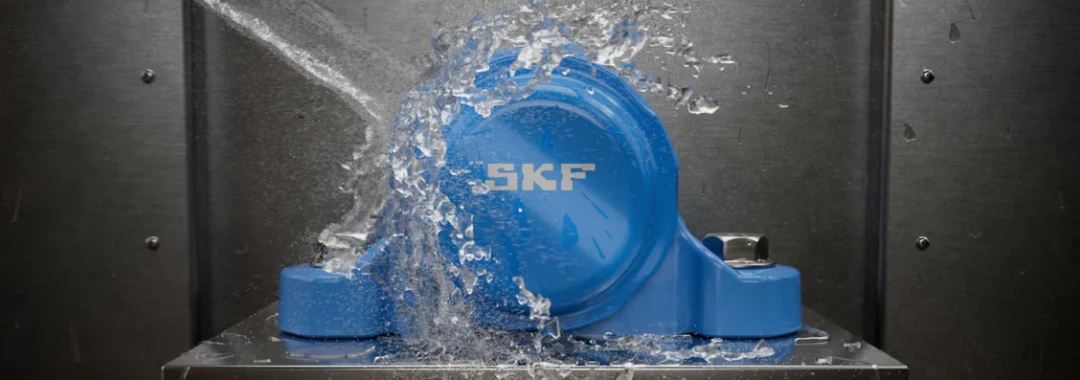
In food and beverage manufacturing, bearing performance is measured not only in hours run, but in hygiene compliance and production uptime. SKF’s Blue Line units are engineered to withstand aggressive cleaning, reduce contamination risk, and support continuous operation.

Food and beverage processing is unforgiving. Production lines often run 24/7, cleaning cycles are frequent and rigorous, and compliance requirements leave little room for error. In this environment, bearings are exposed to far more than rotational load. 

“Regular stringent cleaning requirements to eliminate contaminants and reduce bacteria place enormous pressure on manufacturing machinery to keep performing at maximum levels,” says Fabio Rebecchi, Product Manager – Industrial Bearings at Motion. 

Frequent washdowns, Cleaning-in-Place (CIP) and Sterilisation-in-Place (SIP) processes, and exposure to caustic antibacterial cleaning agents create a harsh operating environment. Standard bearing units can suffer from corrosion, seal degradation, and lubricant breakdown, leading to premature wear and unplanned downtime. 

“Frequent exposure to pressure washdowns and aggressive cleaning chemicals means the bearing unit has to be specifically engineered for that environment,” Rebecchi explains. “It’s not just about load capacity – it’s about how the materials, seals, and lubrication respond to repeated chemical and moisture exposure.” 

Designing for compliance 

Hygiene compliance adds another layer of complexity. Food processors must meet strict standards around contamination control, traceability, and audit readiness. Components that trap moisture or debris, or that are difficult to clean effectively, can introduce risk. 

SKF’s Blue Line bearing units are designed with this reality in mind. The housings are manufactured from food-grade materials and finished in blue to support optical detectability during processing. In the event of component damage, the colour contrast assists with visual identification. 

“The blue colour facilitates optical detection during food processing, which reduces the risk of undetectable product contamination,” Rebecchi says. 

Material selection is equally critical. Certified food-grade grease compliant with stringent standards such as NSF H1 supports safe operation in the event of incidental contact. For manufacturers supplying multiple markets, additional certifications such as Halal and Kosher provide further assurance. 

Reducing maintenance and downtime 

Beyond compliance, reliability remains a commercial driver. Unplanned stoppages in continuous processing operations can have significant financial impact, from lost production to wasted product and labour. 

One of the key differentiators of the Blue Line range is its sealed, relubrication-free design. By removing the need for routine greasing, the units reduce both maintenance labour and the risk of contamination introduced through manual intervention. 

“Maintenance-free products allow the customer to maximise production uptime with the confidence that the product isn’t being contaminated by the maintenance process,” Rebecchi says. 

Robust sealing systems further protect internal components from the ingress of moisture and cleaning agents. By preventing contamination from entering the bearing cavity, the design supports extended service life even under frequent washdown conditions. 

In practice, this translates to fewer replacements, reduced maintenance frequency and more predictable performance across production cycles. 

Supporting performance on site 

Motion supports customers by ensuring ready access to the SKF Blue Line range through its national distribution network, enabling faster response for breakdown situations and planned maintenance. 

“We are here to improve our customers’ performance,” Rebecchi says. “Our customers’ business isn’t to buy bearings – it’s to make product. If we can help them increase production, reduce downtime, and operate with confidence in a highly regulated environment, then we’ve done our job.”