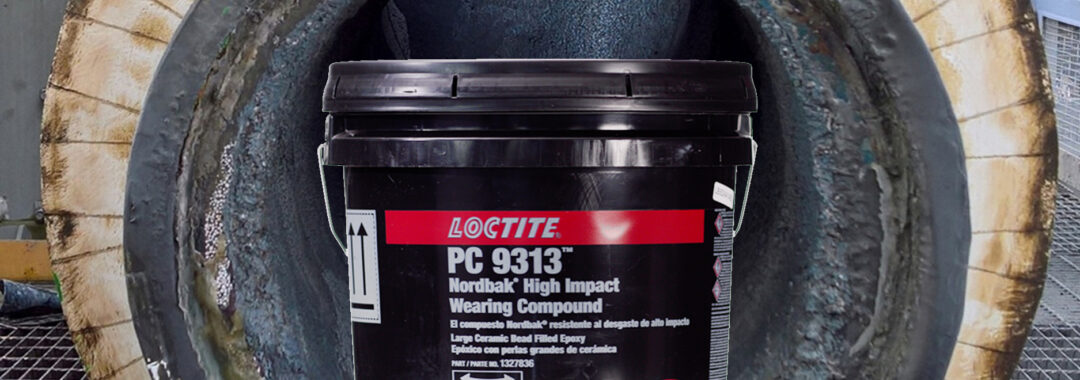
Extending wear life without hot work

In mining plants, abrasion at transfer points and/or changes in the direction of flow can turn into a constant cycle of patching, downtime, and cost. A LOCTITE® wearing compound, supplied through Motion, helped one gold mining operation dramatically extend wear life on a critical ball mill feed pipe – without welding, tiling, or specialist contractors.

Wear is a fact of life in mining. Any time rock and slurry change direction – through chutes, bins, elbows, and transfer points – surfaces are effectively ‘sandblasted’ by abrasive particles. Traditionally, sites have relied on hardened wear plates, ceramic tiles, or frequent patch repairs to protect vulnerable areas. The problem is that many of these fixes are labour-intensive, disruptive, or difficult to repeat consistently. 

That was the situation for one Queensland gold processing operation, where an engineered elbow section on a ball mill feed pipe was wearing rapidly. “The ball mill feed pipe was copping a flogging from particle abrasion,” says Adam Schlatter, Product Manager – Adhesives, Sealants & Chemicals at Motion. “Previous coatings were only lasting four to six weeks, which meant constant recoating, heaps of downtime, and blowing the maintenance budget.” 
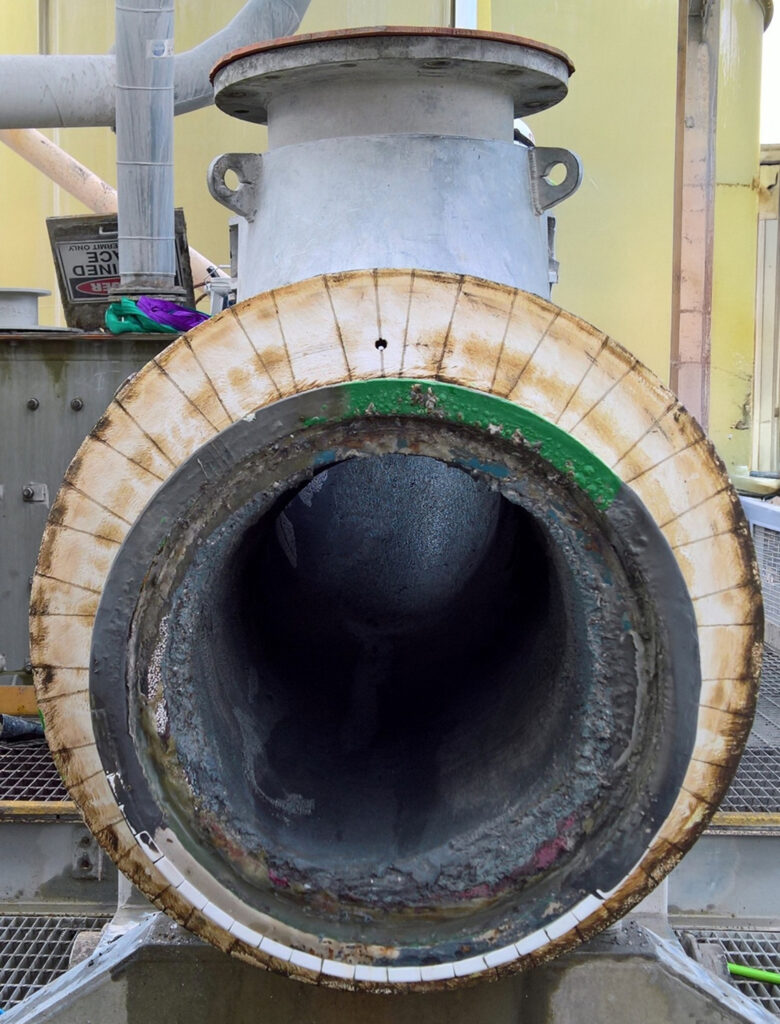
The challenge: frequent recoating and an expensive alternative 

The elbow feeding into the ball mill was not a standard off-the-shelf item. The mines Maintenance Manager says replacement would require fabrication and would cost “tens of thousands” to manufacture and install – before factoring in downtime. 

The site had trialled other wearing compounds without success and eventually brought in a contractor-applied silicon carbide based epoxy system that required specialist application. It lasted longer, but it was very costly and logistically difficult to repeat. “They were looking for a cheaper way to achieve the same result,” Hoelzl says. 

The solution: LOCTITE PC 9313 supplied through Motion 

The alternative trial was LOCTITE® PC 9313, a high-impact sacrificial wearing compound designed for abrasive service. “The customer needed something tough that would handle the impact and provide extended wear protection,” Schlatter says. “LOCTITE PC 9313 offered serious abrasion resistance without the hefty price tag or extended shutdowns of other options.” 

Application was straightforward, and critically, avoided hot work. “The old coating was abraded, washed down with clean water, and left to dry,” Schlatter says. “Then some PC 9313 was manually applied as a primer coating first, followed by the thicker sacrificial topcoat.” 

Hoelzl describes the process as simple and accessible. “It’s like applying bog,” he says. “You don’t need hot work permits for welders and oxy torches. You don’t need a tiler to come out and replace ceramic tiles. One person can mix it and apply it.” 

Results: longer wear life, less downtime, lower labour cost 

The trial delivered immediate value. “The customer was blown away with how long it lasted,” Hoelzl says. Where previous products had only lasted a few weeks, “this lasted many, many months,” and became a go-to solution for other wear points in the plant. 

Schlatter quantifies the improvement: “It provided a massive difference – the customer went from recoating every four to six weeks, out to 38 weeks of solid protection, which saved the customer thousands annually in labour costs alone, plus way less downtime.” 

BOX OUT: What is a LOCTITE MRO wearing compound? 

Trevor Hoelzl, Loctite Application Engineer at Henkel, explains that LOCTITE’s wear protection range includes epoxy-based composites designed to act as sacrificial wear layers. “They’re epoxy-based wearing compounds filled with ceramic beads and other wear prevention additives,” he says. “You mix Part A and Part B into a thick paste, then apply it as a protective layer over the problem area.” 

Unlike weld-on plate or tile systems, the key benefit is repeatability. “Because it’s sacrificial, it slowly wears down,” Trevor says. “When it gets to a certain point, you just put another coat on. It’s infinitely re-coatable.” 
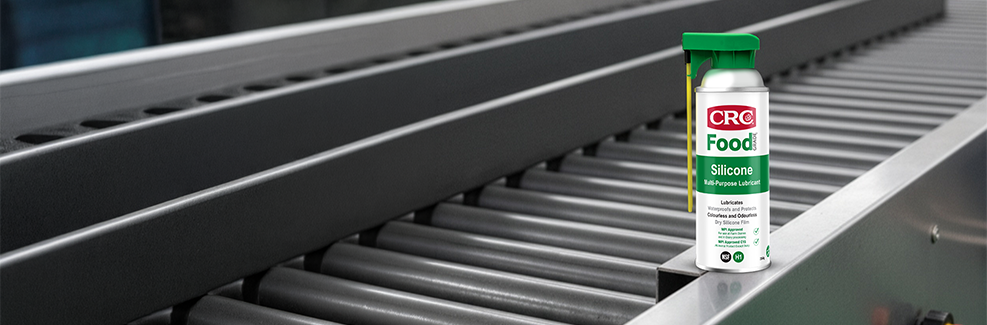
Supporting safe, steady food production

In food and beverage manufacturing, maintenance products have to do more than work well. They have to support hygiene, simplify compliance, and help keep production moving. CRC’s food-grade range gives Motion customers in New Zealand a practical way to do all three. 

In food processing, contamination risk is not limited to ingredients. It can come from lubricants on chains, grease on bearings, cleaners on machinery, or maintenance products used too close to production without the right approvals or documentation. To address all these needs, CRC has developed a wide-ranging offering.  

At the centre of it is the CRC GREENLIGHT™ Food Safety Program, which is designed to make audit and compliance processes easier. Alongside MPI-approved maintenance products, it supports customers with centralised documentation, visual identification tools, site assessment, and ongoing compliance updates. For QA and maintenance teams, that means less time chasing paperwork and more confidence that the right product is being used in the right place.  

Food-grade products for everyday maintenance 

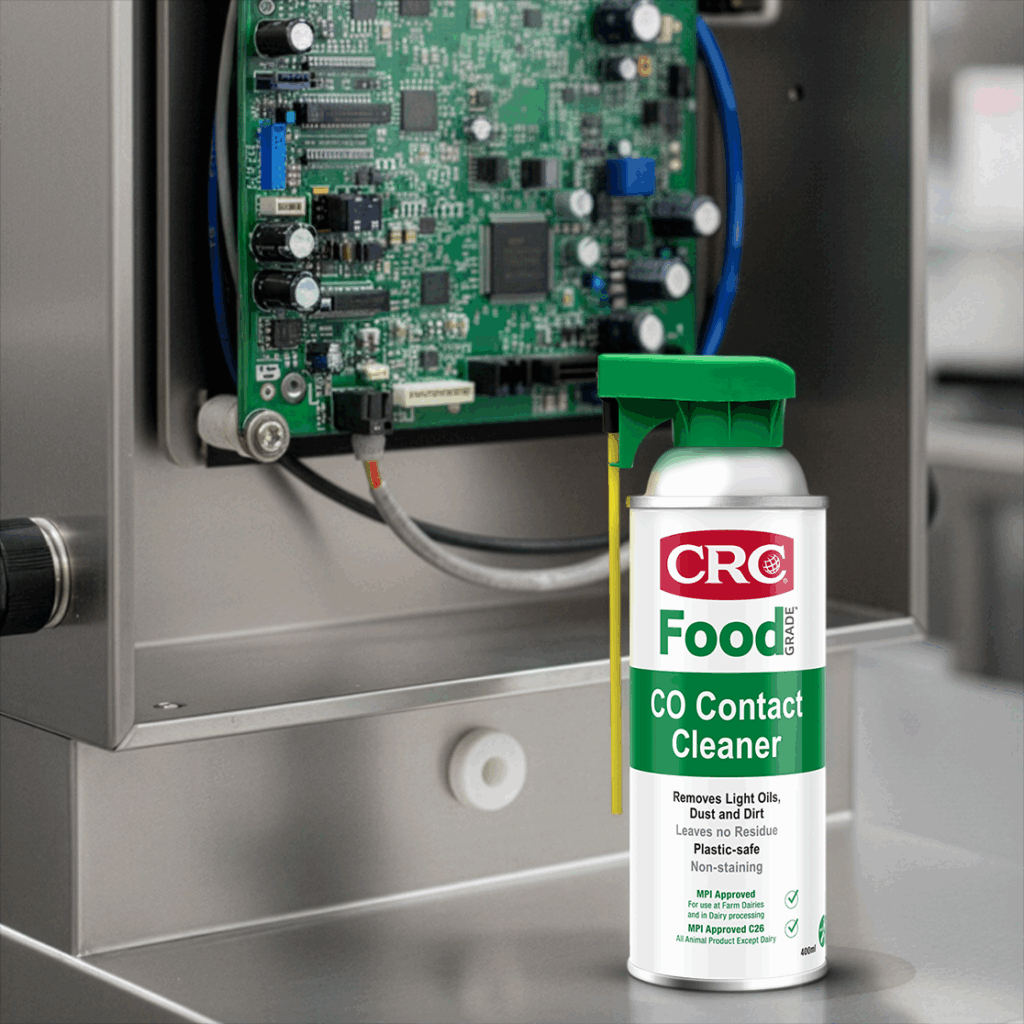
CRC’s food-grade range covers the practical jobs that keep plants running: lubricating, cleaning, protecting, and preventing wear. Standout products include Food Grade Silicone (3043) for dry-film lubrication, Food Grade CO Contact Cleaner (3102) for electrical and electronic equipment, and Food Grade Chain Lube (3091) for conveyor and drive chains. These are the kinds of products that matter in real production environments, where washdowns are frequent, hygiene is strict, and downtime is expensive.  

Problems this range is built to solve 

  • Audit and compliance pressure  
  • Contamination risk near food production  
  • Wear on chains, bearings, and moving parts  
  • Electrical cleaning in high-hygiene environments  

 A safer parts-washing option 

The new SW-33 Mobile Parts Washer gives customers a lighter, more mobile bioremediating parts-washing system, designed to clean effectively without the hazards associated with traditional solvent washers. It uses OzzyJuice degreaser and is a safer choice for both operators and the environment.  

Why buy through Motion? 

For Motion customers, the benefit is access to one of the largest CRC ranges in New Zealand, backed by nationwide supply, trusted service and technical advice. That makes it easier to source approved food-grade products and smarter cleaning systems through one reliable channel. 

RELIABILITY DESIGNED FOR WASHDOWN AND REGULATION

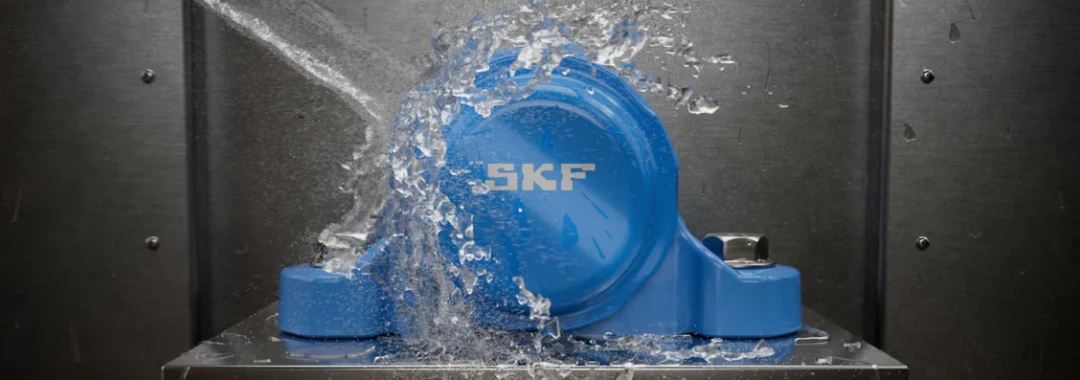
In food and beverage manufacturing, bearing performance is measured not only in hours run, but in hygiene compliance and production uptime. SKF’s Blue Line units are engineered to withstand aggressive cleaning, reduce contamination risk, and support continuous operation.

Food and beverage processing is unforgiving. Production lines often run 24/7, cleaning cycles are frequent and rigorous, and compliance requirements leave little room for error. In this environment, bearings are exposed to far more than rotational load. 

“Regular stringent cleaning requirements to eliminate contaminants and reduce bacteria place enormous pressure on manufacturing machinery to keep performing at maximum levels,” says Fabio Rebecchi, Product Manager – Industrial Bearings at Motion. 

Frequent washdowns, Cleaning-in-Place (CIP) and Sterilisation-in-Place (SIP) processes, and exposure to caustic antibacterial cleaning agents create a harsh operating environment. Standard bearing units can suffer from corrosion, seal degradation, and lubricant breakdown, leading to premature wear and unplanned downtime. 

“Frequent exposure to pressure washdowns and aggressive cleaning chemicals means the bearing unit has to be specifically engineered for that environment,” Rebecchi explains. “It’s not just about load capacity – it’s about how the materials, seals, and lubrication respond to repeated chemical and moisture exposure.” 

Designing for compliance 

Hygiene compliance adds another layer of complexity. Food processors must meet strict standards around contamination control, traceability, and audit readiness. Components that trap moisture or debris, or that are difficult to clean effectively, can introduce risk. 

SKF’s Blue Line bearing units are designed with this reality in mind. The housings are manufactured from food-grade materials and finished in blue to support optical detectability during processing. In the event of component damage, the colour contrast assists with visual identification. 

“The blue colour facilitates optical detection during food processing, which reduces the risk of undetectable product contamination,” Rebecchi says. 

Material selection is equally critical. Certified food-grade grease compliant with stringent standards such as NSF H1 supports safe operation in the event of incidental contact. For manufacturers supplying multiple markets, additional certifications such as Halal and Kosher provide further assurance. 

Reducing maintenance and downtime 

Beyond compliance, reliability remains a commercial driver. Unplanned stoppages in continuous processing operations can have significant financial impact, from lost production to wasted product and labour. 

One of the key differentiators of the Blue Line range is its sealed, relubrication-free design. By removing the need for routine greasing, the units reduce both maintenance labour and the risk of contamination introduced through manual intervention. 

“Maintenance-free products allow the customer to maximise production uptime with the confidence that the product isn’t being contaminated by the maintenance process,” Rebecchi says. 

Robust sealing systems further protect internal components from the ingress of moisture and cleaning agents. By preventing contamination from entering the bearing cavity, the design supports extended service life even under frequent washdown conditions. 

In practice, this translates to fewer replacements, reduced maintenance frequency and more predictable performance across production cycles. 

Supporting performance on site 

Motion supports customers by ensuring ready access to the SKF Blue Line range through its national distribution network, enabling faster response for breakdown situations and planned maintenance. 

“We are here to improve our customers’ performance,” Rebecchi says. “Our customers’ business isn’t to buy bearings – it’s to make product. If we can help them increase production, reduce downtime, and operate with confidence in a highly regulated environment, then we’ve done our job.”  

CLEANER TRANSFERS, SAFER SITES

At high-dust processing sites, airborne particulate is more than a housekeeping problem. Motion New Zealand’s Conveyance Solutions team helps operators contain dust at the source – improving health and safety, reducing cleanup, protecting equipment, and keeping more product on the belt. 

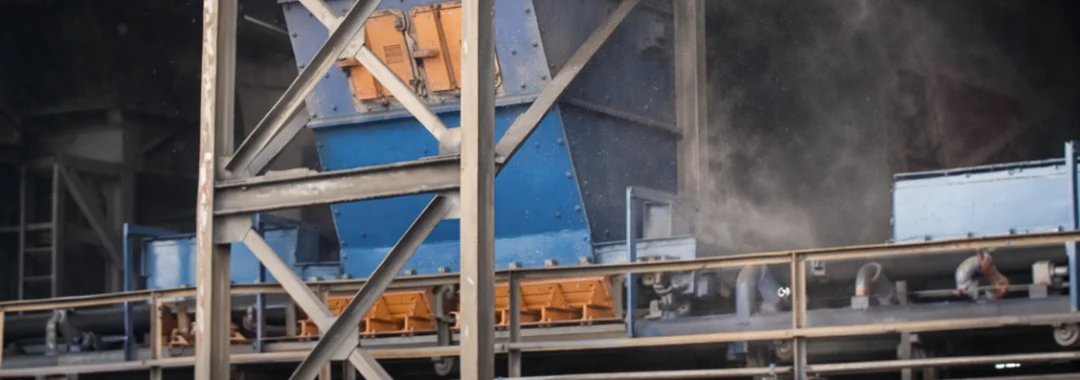
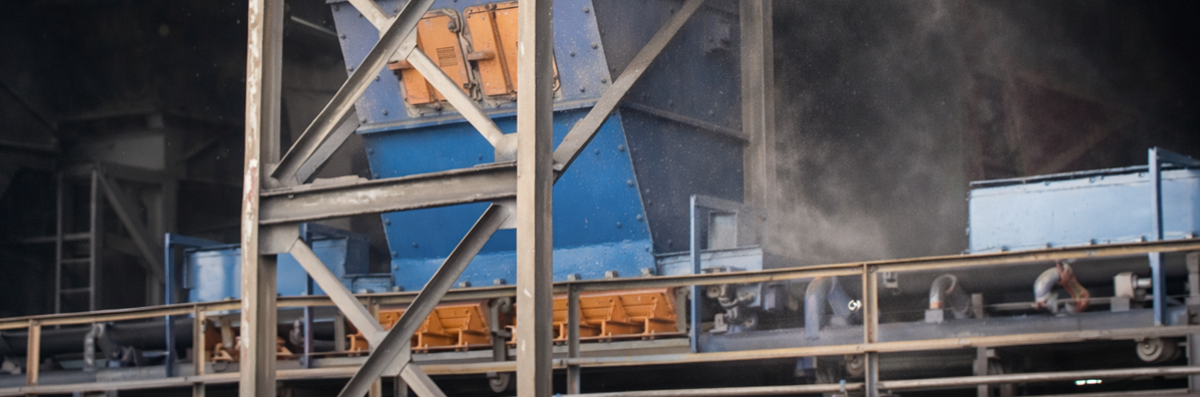
Across heavy processing environments, the worst dust problems often start in the same place: conveyor transfer points. Material drops from one belt to the next, hits steelwork inside a chute or hopper, and a dust plume follows – settling on walkways, structures, equipment and electricals, or escaping into the wider environment. 

Alan Harris, Motion Conveyance Solutions – NZ Manager, says the original driver for many sites seeking greater efficiency is simple efficiency. “Industry associations have recognised that companies can lose between one and three per cent of their load as airborne dust or fugitive material coming off the belt,” he says. “That dust is actually product – and when it doesn’t stay on the belt, it ends up on the floor, under the conveyor, or stuck to the underside of the belt.” 

For a large New Zealand industrial processing site, the impact went well beyond product loss. The customer was also managing tighter expectations around worker exposure to fine particulate, plus heightened scrutiny on environmental discharge – particularly where dust can wash into stormwater and waterways. 

“We’re now dealing with four issues at once,” Harris says. “There’s a health and safety issue, an environmental issue, a production issue, and a maintenance issue – where product build-up can cause damage and breakdowns.” 

The challenge 

Airborne dust creates immediate safety risks: reduced visibility, slip hazards from build-up on floors and walkways, and increased cleaning demands that drive downtime and labour costs. Over time, dust ingress accelerates wear on rotating equipment, rollers and bearings, and can shorten the life of electrical components. 

In certain materials and operating conditions, dust accumulation can also increase fire or explosion hazards – adding another layer of risk that sites must manage through better containment, housekeeping and controls. 

The solution 

Motion’s dust suppression approach focuses first on controlling impact energy and keeping material flow stable at the transfer point. 

“The first thing we look at is anywhere product bangs against a conveyor structure,” Harris explains. “As it bangs around in the hopper, it throws up dust. Then as it hits the belt, it creates another cloud of dust.” 

To reduce that impact, Motion specifies engineered chute and transfer solutions that guide material onto the receiving belt more gently. “By using deflector plates, we can help the product land on the belt at an angle close to the belt’s direction,” Harris says. “That reduces the impact.” 

Next comes containment – holding dust in place long enough for it to settle back onto the belt. “In some cases, that might take 10, 15, 20 metres,” Harris says. “So, we build an enclosure over that section to contain the dust until it settles.” 

Sealing is critical. “If there are gaps, the dust will ‘pump’ out,” he says. “So, we focus on the belt support and sealing underneath – using sealed slider systems rather than relying on rollers, because sag between rollers is where dust escapes.” 

Where required, Motion also uses collection and settling aids that give dust a controlled space to go, rather than venting into the building. “We can hang collection bags from the enclosure so dust has somewhere to expand and then settle back down,” Harris says. 

The result 

With transfer points properly engineered and sealed, customers typically see cleaner floors and structures, improved visibility, reduced clean-up and fewer dust-related maintenance events. Just as importantly, more product stays on the belt – supporting throughput and reducing waste.